
As someone who has spent many years perfecting the art of soundproofing, I understand the importance of creating a peaceful environment in your home or workspace.
Soundproofing an existing room might seem daunting at first, but with the right guidance, it's entirely achievable. In this guide, I'll share my expertise to help you transform your space into a quieter sanctuary.
We'll cover everything from the basics of soundproofing to practical tips and techniques that you can implement with ease. So let's dive in and learn how to soundproof an existing room effectively!
Understanding Soundproofing
To understand soundproofing, you need to know why it's important and how it works. Soundproofing is about stopping sound from moving between rooms.
It's not about making everything totally silent, but about making it quieter. People often think it's impossible to stop all noise, but you can make a big difference with the right steps.
Assessing Your Room
Before you start soundproofing, take a good look at your room. See where the noise is coming from and how loud it is.
Look for any gaps or holes where sound might get through. Check your windows, doors, and walls.
Understanding these things will help you figure out what you need to do to make your room quieter.
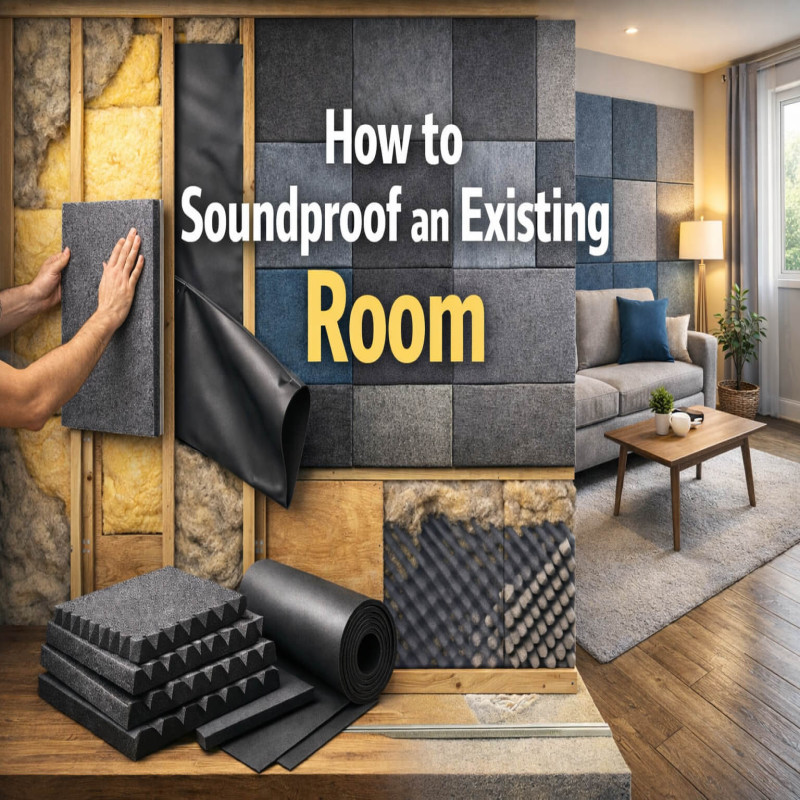
How to Soundproof an Existing Room
Let's learn how to make your room quieter. First, check for any holes or gaps in your walls, windows, or doors.
Fill them to stop sound from coming in or going out. Next, get better windows and doors that block more noise. You can also put thick curtains or rugs in your room to soak up sound.
Lastly, think about adding insulation to your walls or ceiling to make things even quieter. These easy steps can really help make your room nice and quiet.
Sealing Gaps and Cracks to Prevent Sound Leakage
One important step in making your room quieter is to fill in any holes or spaces where sound can get through.
Look for gaps around your windows, doors, and walls. You can use things like caulk or weather-stripping to seal them up.
This will help stop sound from coming in or going out of your room. Remember, even small gaps can let a lot of noise through, so it's worth taking the time to seal them properly.
Upgrading Windows and Doors for Better Sound Insulation
Another way to make your room quieter is by getting better windows and doors. Single-pane windows and hollow-core doors don't do a good job of keeping out noise.
You can replace them with double-pane windows and solid-core doors instead. These are thicker and block more sound from coming in or going out. It's a bit of an investment, but it can make a big difference in how quiet your room is.
Adding Mass to Walls and Ceilings to Block Sound Transmission
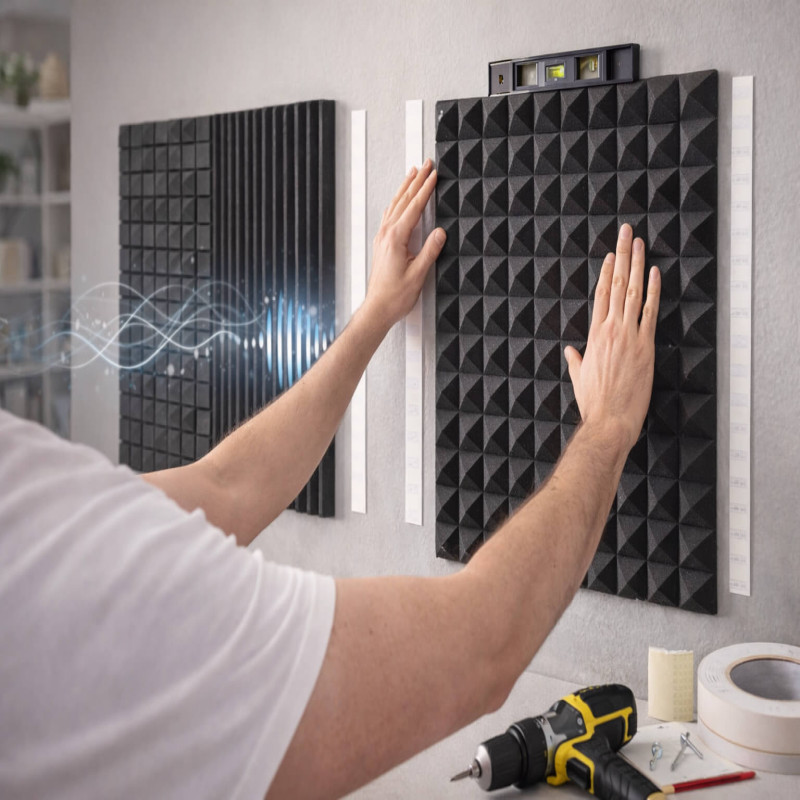
To make your room quieter, you can make your walls and ceilings heavier. This means adding dense materials like mass-loaded vinyl or acoustic panels.
These materials absorb sound and stop it from traveling through your walls and ceiling. You can attach them directly to the surface or hang them like decorations.
Adding mass to your walls and ceilings can make a big difference in reducing noise in your room.
Installing Acoustic Materials and Insulation
Another way to make your room quieter is by using special materials that absorb sound. These materials are called acoustic panels or insulation.
You can put them inside your walls or ceiling to soak up sound and stop it from bouncing around.
Fiberglass or rock wool insulation are common options. They're easy to install and can make a big difference in how quiet your room is. Just make sure to follow the instructions carefully when putting them in place.
Implementing Decoupling Techniques to Minimize Vibrations
To make your room quieter, you can use something called decoupling. Decoupling means separating things so vibrations don't travel easily.
You can do this by using special materials like resilient channels or sound isolation clips.
These go between surfaces like walls or floors to stop vibrations from moving through them.
It's like putting a barrier between the noisy parts of your room and the quiet ones. Decoupling can really help make your room much quieter.
Tips and Tricks for Effective Soundproofing
Here are some helpful tips to make your room quieter:
- Use heavy curtains, rugs, and furniture to absorb sound and reduce echoes.
- Place furniture strategically to break up sound waves and create barriers.
- Consider using soundproofing accessories like door sweeps and soundproof curtains.
- Think about adding rugs or carpeting to your floors to help absorb sound.
- If you have a budget, consider hiring a professional for more complex soundproofing projects.
These simple tricks can make a big difference in how quiet your room feels.
Conclusion
In summary, making your room quieter is something you can do with a few simple steps. By sealing gaps, upgrading windows and doors, and adding special materials, you can reduce noise and make your space more peaceful.
Remember, you might not make everything totally silent, but even a little less noise can make a big difference. Don't be afraid to try different things and see what works best for you.
Thanks for reading, and good luck making your room quieter!
Faqs
Can I soundproof a room completely?
It's difficult to achieve complete silence, but you can significantly reduce noise with the right techniques.
How do I know if my room needs soundproofing?
If you're bothered by noise from outside or if sound easily travels between rooms, your room could benefit from soundproofing.
Can I soundproof my room without hiring a professional?
Yes, many soundproofing techniques are DIY-friendly. However, for complex projects, consulting with a professional might be beneficial.
Meet Your Guide

Go Soundproof Team
The Go Soundproof Team is a group of soundproofing enthusiasts and product testers dedicated to helping you create quieter, more peaceful spaces. We review and test the latest quiet appliances and noise-reducing solutions to provide honest, expert advice you can trust.