

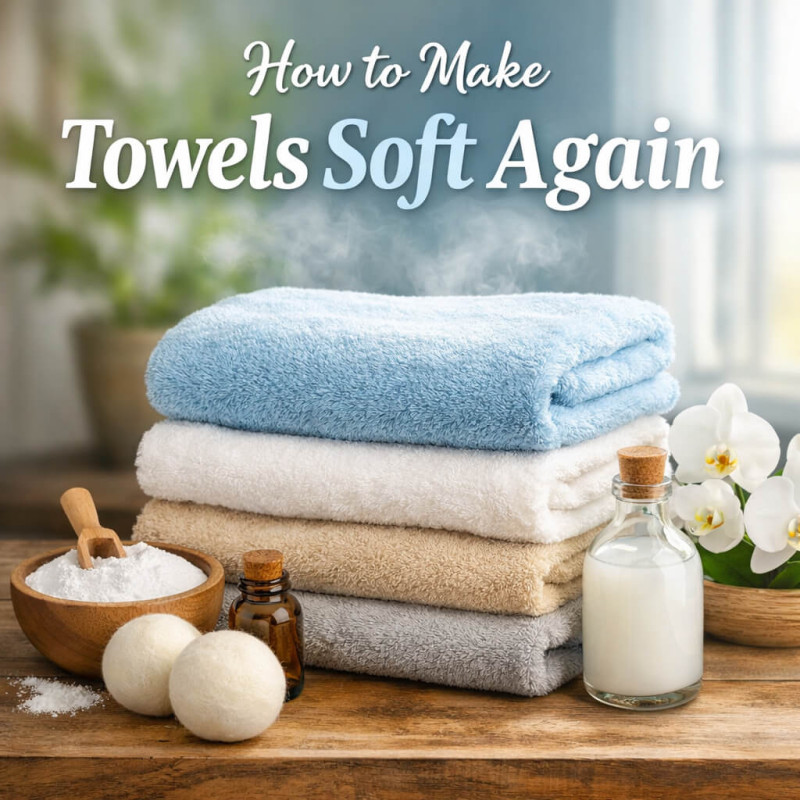
Nothing is more frustrating than reaching for a towel after a refreshing shower only to find it rough, stiff, and uncomfortable. Over time, towels lose their softness due to detergent buildup, hard water, and improper washing techniques. Fortunately, restoring their plush feel is not only possible but also simple with the right approach.
Key Takeaways
- Overuse of detergent and fabric softeners contributes to towel stiffness.
- Hard water mineral buildup can be eliminated with natural solutions.
- Proper drying techniques enhance towel softness.
- Regular maintenance ensures long-lasting comfort.
Understanding Why Towels Become Stiff
Towels naturally lose their softness due to detergent residue, mineral accumulation, and improper drying practices. Excess detergent does not always rinse out completely, leading to a sticky, stiff texture. Similarly, using fabric softeners frequently can coat the fibers, making them less absorbent and rough to the touch. Hard water containing minerals such as calcium and magnesium also plays a role in diminishing a towel’s plushness.
Another factor is the drying method. Air-drying in a humid environment or using high heat in a dryer can cause towels to become coarse. Understanding these causes allows for a more effective restoration strategy that maintains softness over time.
The Role of Proper Washing Techniques
Choosing the right washing method significantly impacts towel texture. Using too much detergent contributes to buildup, making fibers rigid. A minimal amount of mild detergent, combined with warm water, is ideal for preserving softness. A crucial step is adding white vinegar to the rinse cycle. Vinegar helps break down residue and restore the towel’s natural fluffiness without harming the fibers.
Another essential practice is washing towels separately from other laundry. Mixing them with synthetic fabrics increases friction, which accelerates wear and tear. Additionally, opting for an extra rinse cycle ensures all detergent is completely removed, preventing stiffness caused by residual soap.
Why Fabric Softeners Can Ruin Towels
Many believe fabric softeners enhance towel softness, but they often do more harm than good. The chemical composition of these products leaves a waxy coating on fibers, reducing absorbency and leading to a rough texture over time. Instead of fabric softeners, natural alternatives such as baking soda can be used.
Baking soda effectively loosens fibers, eliminates odors, and restores the original softness of towels.Avoiding fabric softeners does not mean sacrificing comfort. Instead, using natural methods ensures that towels remain soft while retaining their ability to absorb moisture efficiently. Long-term softness depends on eliminating buildup rather than coating fibers with artificial substances.
The Best Natural Remedies for Soft Towels
Natural solutions provide an effective and eco-friendly way to soften towels. White vinegar acts as a powerful residue remover, breaking down soap buildup while maintaining fiber integrity. Adding one cup of vinegar to the rinse cycle works wonders for revitalizing texture.Another highly effective remedy is baking soda.
This versatile household ingredient helps eliminate trapped detergent and freshens towels. A half-cup of baking soda added to the wash cycle ensures improved softness without compromising towel quality.
Incorporating Epsom salt as a softening agent is another valuable technique. This natural mineral compound counteracts hard water effects, preventing roughness and maintaining a plush feel over time.
Drying Methods That Preserve Softness
Drying towels correctly plays a major role in keeping them soft. Using a high heat setting in the dryer can damage fibers, making them brittle. Instead, a medium-heat setting with dryer balls creates a gentle tumbling action that fluffs towels while preventing stiffness.
For those who prefer air-drying, shaking out towels before hanging them allows fibers to maintain their fluffiness. Avoid drying in direct sunlight for extended periods, as excessive heat exposure may weaken fibers and reduce their lifespan. An occasional tumble in the dryer on low heat after air-drying can help restore plushness.
Common Washing Mistakes to Avoid
Several common mistakes contribute to towel roughness. Overloading the washing machine prevents thorough cleaning, leaving behind detergent and mineral buildup. Skipping the extra rinse cycle allows residual soap to harden on fibers, reducing softness. Additionally, using an excessive amount of detergent creates unnecessary stiffness rather than improving cleanliness.
Neglecting to clean the washing machine regularly also affects towel texture. Over time, detergent, fabric softener, and hard water minerals accumulate in the machine, transferring onto towels during each wash cycle. Running an empty cycle with vinegar once a month keeps the washing machine clean and ensures towels remain fresh and soft.
Choosing the Right Detergent for Soft Towels
The type of detergent used significantly affects towel texture. Harsh chemical-laden detergents strip fibers of their natural softness. Opting for mild, eco-friendly detergents free from synthetic additives helps maintain towel quality. Liquid detergents are preferable, as they dissolve more easily and rinse out completely, reducing the risk of residue buildup.
For households with hard water, using a detergent specially formulated to combat mineral deposits enhances towel softness. Water softeners can also be used in combination with detergent to prevent minerals from bonding to fabric fibers.
How Often Should Towels Be Washed
Washing towels too frequently can lead to wear and tear, while infrequent washing results in bacteria and odor buildup. Ideally, towels should be washed every three to four uses to balance cleanliness and longevity.
Rotating towels and avoiding excessive exposure to harsh conditions helps maintain their quality. Storing them in a well-ventilated area prevents mildew growth, ensuring they stay fresh between washes.
Final Thoughts
Restoring towel softness requires a combination of proper washing techniques, natural remedies, and mindful drying methods. Eliminating detergent buildup, avoiding fabric softeners, and using natural softening agents such as vinegar and baking soda ensure towels remain plush and comfortable. By adopting these best practices, maintaining soft and absorbent towels becomes effortless, providing daily comfort and long-term durability.
Meet Your Guide

Go Soundproof Team
The Go Soundproof Team is a group of soundproofing enthusiasts and product testers dedicated to helping you create quieter, more peaceful spaces. We review and test the latest quiet appliances and noise-reducing solutions to provide honest, expert advice you can trust.