

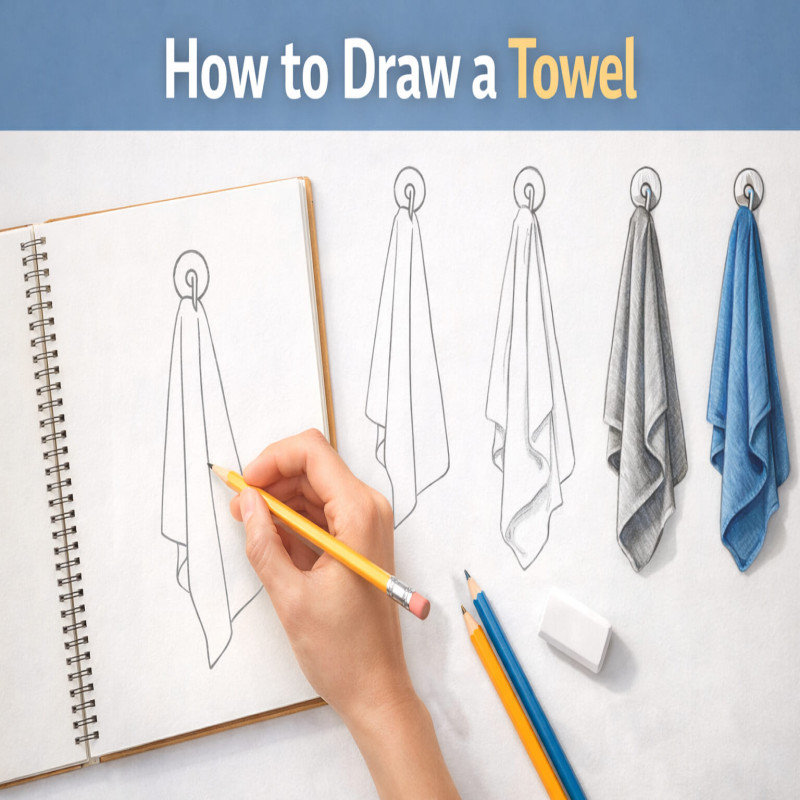
Drawing fabric, especially a towel, presents a unique challenge due to its texture, folds, and the way it interacts with light and shadow. Capturing these elements with precision is essential for creating a realistic and visually compelling piece of art. Whether you are a beginner or an experienced artist looking to refine your skills, understanding the fundamentals of towel drawing will significantly improve your overall fabric rendering abilities.
Key Takeaways
- Understanding the structure and texture of a towel is crucial for realism.
- Light, shadows, and folds play a major role in creating depth.
- Using the right tools and shading techniques enhances the final artwork.
Observing the Structure and Texture of a Towel
To begin drawing a towel, one must first closely observe its structure. A towel is typically soft, flexible, and exhibits a fibrous texture. Unlike other fabrics, towels have a slightly raised surface due to the loops of woven fibers. Understanding how these fibers catch the light and cast shadows will help in rendering them accurately.
Additionally, paying attention to the way a towel folds and drapes over objects or surfaces will ensure a more natural and organic depiction. Artists should study reference images or real towels placed under different lighting conditions to grasp the intricate details that define their appearance.
Sketching the Basic Outline
The first step in drawing a towel involves lightly sketching its basic shape. This outline should capture the general form, whether the towel is folded, draped over an object, or casually placed. It is essential to start with simple lines that establish the towel’s proportions and positioning within the composition. Keeping the lines loose and fluid at this stage allows for easy adjustments. Avoid focusing on details initially; instead, prioritize the overall shape to ensure a strong foundation for subsequent refinements.
Adding Folds and Drapery
Once the basic outline is in place, the next step is to incorporate folds and drapery. The way a towel folds depends on its placement and interaction with surrounding objects. Studying how fabric behaves in real life will guide artists in accurately depicting natural-looking folds. When adding folds, it is beneficial to use smooth, curved lines that follow the contours of the towel. The variation in thickness and direction of these folds contributes to a realistic depiction. Additionally, ensuring that the fabric gathers or bunches naturally will enhance the authenticity of the drawing.
Shading for Depth and Realism
Shading is crucial in bringing the towel to life. The play of light and shadow determines how three-dimensional the drawing appears. Identifying the light source will help in placing highlights and shadows accurately. The darkest areas usually appear within deep folds, while lighter areas remain more exposed. Using techniques such as cross-hatching, blending, and stippling can create a soft, realistic texture. Gradual transitions between shades will prevent a flat appearance and provide a sense of volume. Artists should experiment with different pencil grades or digital tools to achieve the desired tonal variations.
Capturing the Towel’s Texture
Unlike smooth fabrics, towels possess a slightly rough surface. This texture can be represented through small, irregular marks or stippling techniques. The goal is to suggest the presence of tiny fibers without drawing each one individually. In some cases, artists use an eraser to lift highlights and create the illusion of light catching the raised fibers. By carefully layering tones and varying pressure, a convincing terrycloth texture can be achieved.
Refining Details and Enhancing Realism
Once the primary elements of the towel are established, refining the finer details will elevate the drawing. Paying attention to subtle variations in shading and adjusting contrast where needed ensures a polished outcome. At this stage, artists can refine edges, enhance highlights, and add any final touches that contribute to the overall realism of the piece. Stepping back to assess the artwork from a distance can provide a fresh perspective and help identify areas that require further refinement.
Conclusion
Drawing a towel requires careful observation, patience, and a strategic approach to capturing folds, shading, and texture. By mastering these elements, artists can improve their overall ability to depict fabric realistically. The key lies in understanding how light interacts with the surface and using a combination of techniques to convey softness and depth. With practice, anyone can develop the skills necessary to create lifelike towel drawings that enhance their artistic repertoire.
Meet Your Guide

Go Soundproof Team
The Go Soundproof Team is a group of soundproofing enthusiasts and product testers dedicated to helping you create quieter, more peaceful spaces. We review and test the latest quiet appliances and noise-reducing solutions to provide honest, expert advice you can trust.